Horses of Hoofprint Bay Beginner Guide: First Days Done Right
A practical Horses of Hoofprint Bay beginner guide covering starter horse stats, daily care, lesson income, training, first competitions, boarding, and smart early spending.
What Kind of Game Is Horses of Hoofprint Bay?
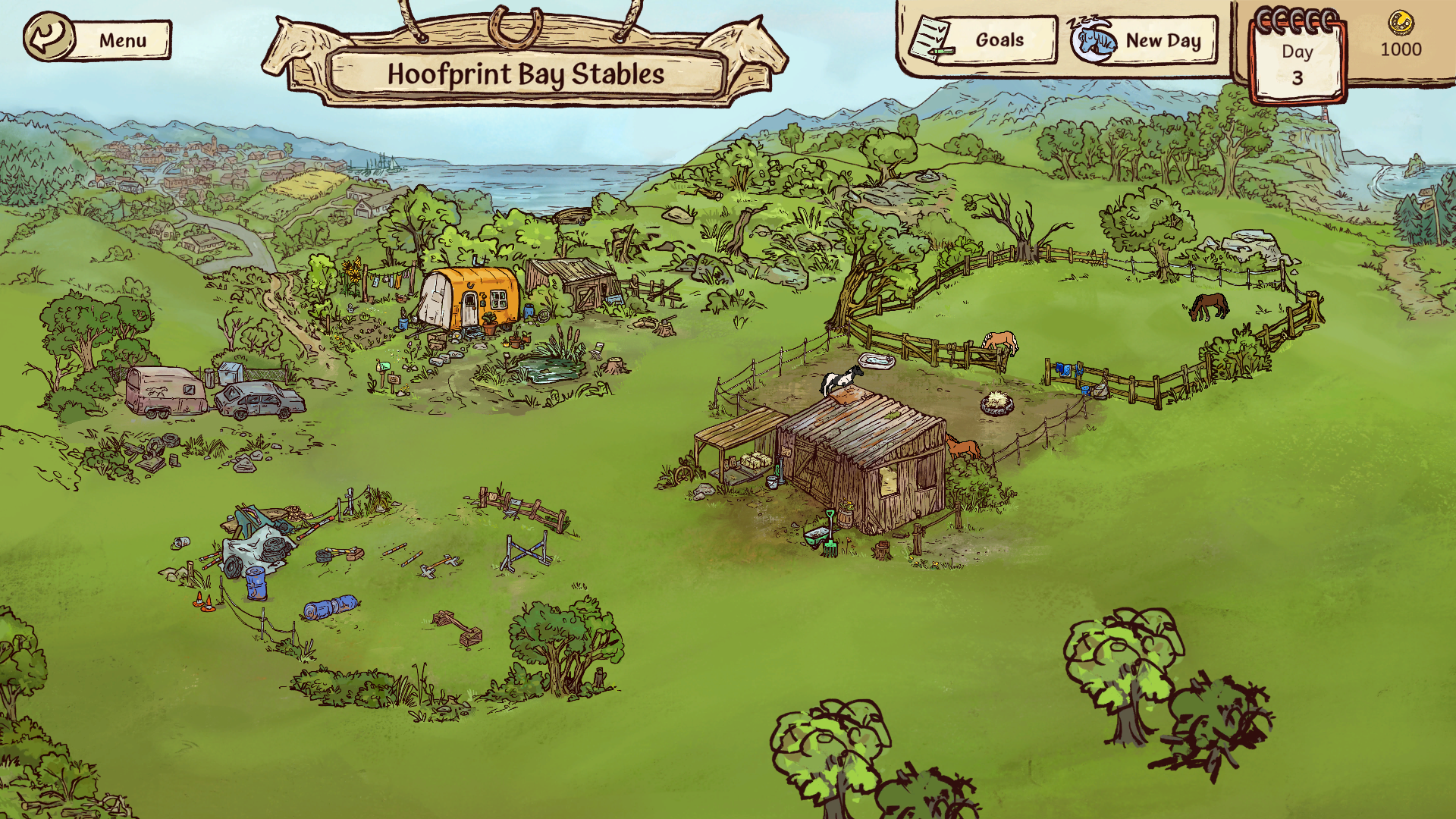
Horses of Hoofprint Bay is a hand-drawn 2D point-and-click barn-building game from Thogli Studios, a two-person development team from Germany, with marketing and publishing handled by Alice Ruppert of The Mane Quest. You start small — a run-down trailer, a muddy lot, and a ramshackle hut — and slowly grow the place into a working stable through daily care, training, competitions, lessons, boarding, and breeding (The Mane Quest). The game draws clear inspiration from the classic 2003 stable-management title Pferd & Pony: Mein Pferdehof, and it leans into a cozy, lived-in art style inspired by the northern German countryside (The Bridle Paths).
Don't let the relaxing look fool you. Lessons can quietly lower your horse's training stats, a badly timed jump can cost you a competition entry, and mixing the wrong horses can turn a profitable boarding contract into a bill. This Horses of Hoofprint Bay beginner guide focuses on the early decisions that matter most, before you buy more horses or chase championship upgrades.
Your early income comes from three main streams: winning competitions, giving riding lessons, and raising foals to sell. Forest trails round things out with a change of scenery and extra rewards. If you prefer watching the priorities in action, this full breakdown covers the ten things worth doing first:
Know Your Starter Horse's Stats and Potential
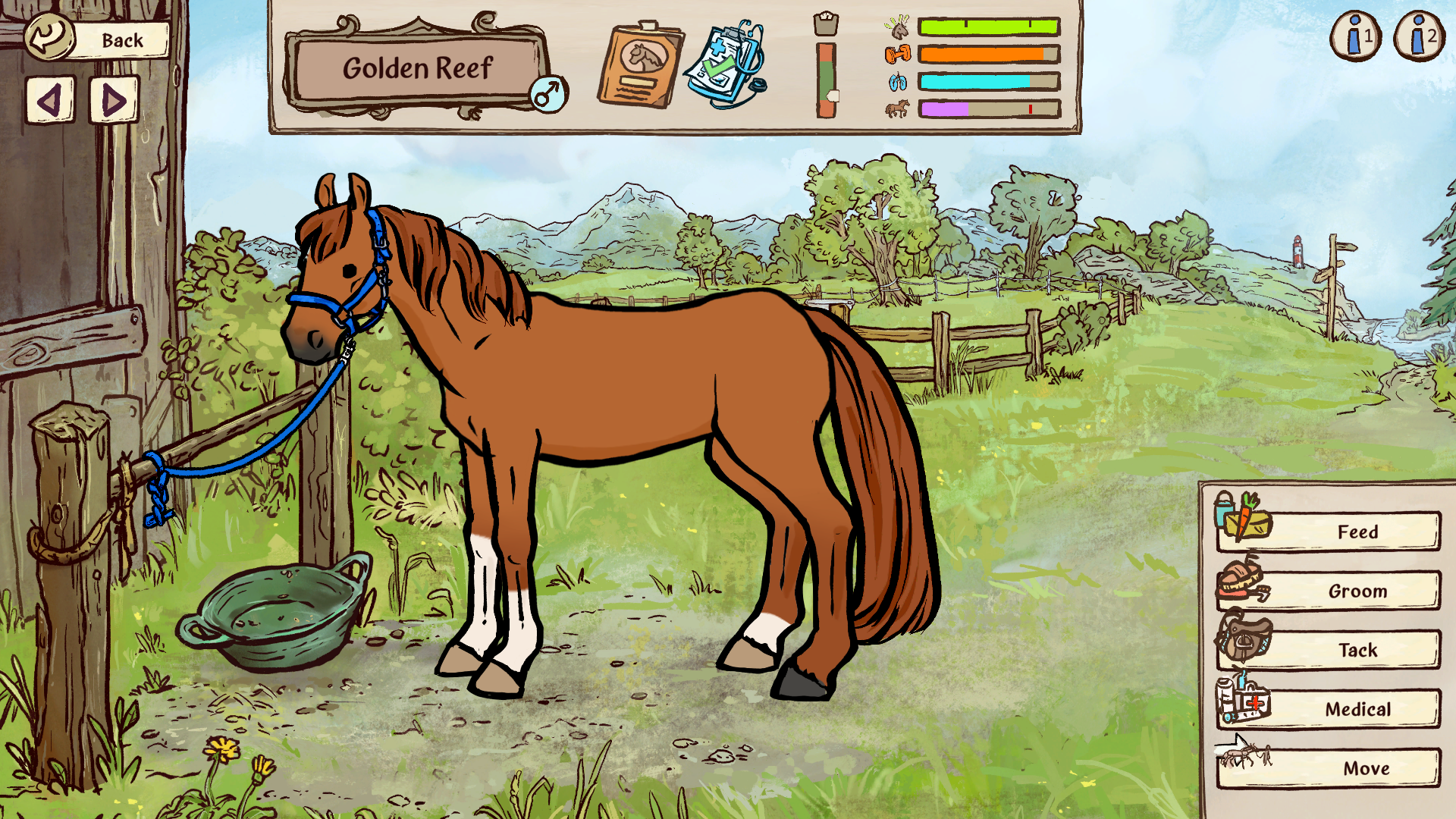
Before you train anything, open your horse's information panel and study two bars: Strength and Endurance. They work together, and understanding them prevents days of wasted effort.
| Stat | What It Does |
|---|---|
| Strength | Spent on demanding work like galloping and jumping. If it empties mid-course, your horse may not be able to finish. |
| Endurance | Controls how efficiently that strength recovers during a ride. |
Now look past the filled portion of each bar. The grayed-out sections show your horse's maximum potential. Training fills the room your horse already has — it never creates more room. Your starter mare has fairly modest potential, especially after the updated early-game balancing. She is perfect for learning the controls, earning money, and getting through your first events, but she is not a secret champion waiting for enough grinding. Build her stats toward easier disciplines instead of repeating exercises after she hits her ceiling, and plan to buy a better horse when the time is right.
One more habit worth starting on day one: open the in-game library. The training and horse stat books explain what each bar means and why a horse might not respond the way you expect. You don't need to memorize anything — just know where to check an answer before paying to fix a problem that isn't really a problem.
Run Daily Care and Money Like a Pro
Make care the first job of every day
You want to ride, not clean a stall — but skipping the small jobs is how you end up paying for big ones. Work through this checklist at the start of each day, before lessons or training distract you:
- Feed and water every horse.
- Clean up manure.
- Brush out dirt and check hooves.
- Treat any scrapes or health issues before adding workload.
Good coat and hoof condition helps prevent issues like saddle sores and abscesses. Also watch the activity meter: a horse that has already worked hard does not need another demanding session just because daylight remains. Overdoing it raises the risk of trouble, and paying for treatment is a rough way to learn that lesson. Once boarders arrive, this routine matters even more — you're building a reputation for looking after other people's animals.
Watch the bank balance before the upgrade button
Buildings cost money to maintain, horses need supplies, and vet visits can take a chunk out of your savings. Start each session in the office: review your finances, then check your objectives. Some unlock after earlier tasks, others appear as days pass, and completing them pays money — a lifeline before you have dependable income.
A practical habit: before buying anything, check whether an objective is nearly complete and finish that first. Then ask what a purchase actually unlocks. Extra stable capacity is useless while stalls sit empty; a training facility or competition access that removes your current bottleneck is usually the smarter buy. Keep a modest cash reserve for care and unexpected treatment — spending down to zero leaves your whole plan stuck.
Earn with lessons, but know the catch
Riding lessons are one of your best early income sources. You watch a student's posture, then correct their hands, balance, and leg position as the lesson continues. Spotting problems quickly earns extra tips, and reliable beginner lessons beat chasing the highest-paying option and missing corrections.
Here's the catch many new players miss: lessons can reduce a horse's strength and endurance stats. You're earning income while possibly undoing training progress on your competition mount. Check the stat bars after lessons rather than assuming every ride makes her fitter. The cleanest solution is flexibility — one horse for lessons, another for competitions. Use lessons when money matters, then protect time for training that actually builds stats back.
Train Smart: Transitions, Confidence, and Jumping
Choosing the right exercise beats stacking sessions
Many new players treat training like a race to fill every bar. In Hoofprint Bay, picking the right exercise matters more than piling up sessions. Lunging is a strong early option for strength and endurance, and it works with young horses that aren't ready to be ridden. The challenge is hitting the gait transitions — walk, trot, and canter — at the moments the exercise asks for them. If you keep missing them, stop reacting at the last second. Watch what's approaching, prepare the correct input, and give yourself a moment to see how your horse responds. Randomly tapping commands makes the rhythm harder to learn.
While riding, keep an eye on the strength bar. Galloping and jumping spend it, and endurance only helps recovery during the ride — that's not permission to stay at full speed the whole time. A controlled, completed session is worth more than an ambitious run that ends with an exhausted horse and no result.
Confidence and praise change everything
If a horse keeps choosing its own pace, the problem may not be physical at all. Low confidence makes horses change gait on their own or respond less reliably — maddening when you're chasing a precise transition. Watch for the warning icon before an unprompted gait change; it's your chance to correct the horse before it speeds up or slows down. There's also an easy-to-miss mechanic: praising your horse immediately after it obeys a requested gait change builds confidence, but the timing window is short, so don't wait until you're halfway across the arena. Check the exact control in your settings or the library, then practice the sequence.
Desensitization training offers another route. Approach the frightening object, watch your horse's reaction, praise curiosity, and back off when the horse grows worried. Forcing the approach misses the point — you're building a horse that stays manageable when something unfamiliar happens. Personality traits matter too: before blaming your controls, check confidence, morale, and the horse's individual tendencies.
Jump timing and your first competition
Crashing into every fence doesn't automatically mean your horse needs more strength. Jumping has its own timing, and your approach gait changes how a jump works: a low obstacle may need nothing more than a controlled trot, wider fences demand more distance, and water jumps are another case entirely. When you struggle with an obstacle, notice where the horse is when you press jump and where it lands, then change either speed or takeoff timing — one variable at a time — so you can tell what actually helped.
There's no prize for struggling with accessibility settings switched off. Look for jump-off indicators or auto-jump in the settings if manual timing spoils the experience. Just remember that assists won't fix a horse that's out of energy or facing a course beyond its ability — which is exactly why practice belongs in the arena, not in competitions where every failed entry costs money.
This is where the starter mare's limit comes back into play. She may never be capable of the first proper showjumping event, even fully trained. Caprilli tests exist to bridge that gap, mixing precise gait transitions with low obstacles — a much better early goal for a modest horse. Work through the required arena training, unlock the transport you need for competitions, and practice the actual skills being tested before entering. Presentation counts too: a dirty horse or inappropriate clothing hurts your prestige, and so do failed events. Clean up, check condition, and enter with a plan. Consistent results build the reputation that opens better opportunities later.
Board, Breed, and Expand Without Going Broke
Read every boarding contract
Boarding looks like free money for your empty stalls, but it's only simple if you read what each horse needs before accepting.
| Contract Type | What It Requires | Best For |
|---|---|---|
| Part board | Relatively basic field care | Beginners with limited time |
| Full board | Hands-on care, including grooming | Steadier income once routines are solid |
| Training board | Regular exercise; improved stats can earn a bonus payment when the horse leaves | Only when you have spare training hours |
Check the contract duration and the horse's training goals before signing. If you're already juggling lessons and competition practice, a demanding training boarder may cost more time than the payment is worth. Start with contracts that fit the day you actually have.
A serious warning: don't casually keep stallions and mares together. Unplanned breeding can happen, including with boarded mares, and players have reported losing boarding income and facing penalties when it did. Learn how your fields and stable groups work before buying a stallion or accepting new arrivals, and keep horses separated appropriately instead of discovering the consequences at the end of the day.
Grow with purpose
Before expanding, answer one question: what is your next horse supposed to accomplish? If the answer is tougher competitions, check the breeder's animals for real improvement in strength and endurance potential — don't buy a second horse just because it's beautiful if it can't do the job your starter mare struggles with. Community players recommend a related trick: train up your first horse and sell it to fund a genuinely better mount (Horses & Video Games community thread).
Breeding becomes powerful later because it can raise potential across generations, with coat colors, markings, and personality traits inherited along the way. But a foal needs time and space, and a poor pairing is no shortcut to better results. Plan which mares and stallions you want together — and keep them apart when you don't.
Prestige ties the whole economy together. Caring for boarders, winning suitable competitions, improving buildings, and raising quality horses all feed into it, and higher prestige unlocks better breeder stock, more tech, and additional trails. So don't upgrade everything: buy the facility that removes your current bottleneck, and hold off on staff until the workload actually justifies the wages. The real skill in this game isn't turning a weak horse into a champion overnight — it's knowing when to train, when to earn, when to stop, and when you've finally outgrown what you started with.
Frequently Asked Questions
What should I do first in Horses of Hoofprint Bay?
Check your starter horse's strength and endurance potential, handle basic care every morning, review your finances and objectives in the office, and aim your first competition preparation at Caprilli tests rather than full showjumping. This Horses of Hoofprint Bay beginner guide order — understand, care, earn, then compete — prevents the most expensive early mistakes.
Do lessons really lower my horse's stats?
Yes. Lessons can reduce strength and endurance, so a horse doing lesson duty is quietly losing training progress. Check the stat bars after lessons and split duties between a lesson horse and a competition horse when you can afford a second mount.
How do I unlock competitions without grinding?
Complete the required arena training and secure competition transport, then target Caprilli tests, which suit a modest horse's abilities. Players in the community report unlocking competitions anywhere from day 4 to day 8 depending on how aggressively they train and take on boarders (Horses & Video Games community thread).
Why does my horse keep changing gait on its own?
Low confidence, not necessarily low fitness. Watch for the warning icon before the unprompted gait change, correct it early, and praise the horse immediately after it obeys a requested transition — the praise window is short. Desensitization training and checking the horse's personality traits also help.
What do the grayed-out sections of the stat bars mean?
They show the horse's maximum potential. Training can only fill the room that already exists — it never expands it. That's why the starter mare has a ceiling, and why buying a horse with higher potential eventually matters more than endless grinding.
Should I buy a stallion early?
Not until you understand field and stable group management. Unplanned breeding — including with boarded mares — has cost players boarding income and triggered penalties. Learn to separate horses appropriately first, then use stallions deliberately as part of a breeding plan.